
New York gods
A transit mythology

Happy Week 3 - I’m saving for the holidays and can’t afford to pay you all.
This week’s post is something borne out of a real conversation with my doorman, somebody I chat with daily. In the past I would have sat on this for months and maybe never written anything about it. Instead, to avoid financial ruin, I wrote this up today. I wish I had more time to sit with it, but that’s the whole point of this self-punishment scheme I’ve set up.
“Ian, lemme ask you a question.”
“Shoot.”
“Say you see a homeless guy unconscious on the train. Do you stop the train to get him medical help?”
Suddenly we’re in trolley problem territory, not our usual fare, and I freeze up a bit. Of course I’ve seen this exact situation a million times, men laid out the length of the bench on the subway, perfectly still with feet exposed. Of course the right answer is yes, but the practical answer - the one I’ve made countless times - is no.
“Uh honestly probably n—”
“You wouldn’t, right? Listen to this - I’m on the train coming in tonight and there’s somebody sleeping on the bench. I can tell he’s sleeping because I see him breathing. But this lady has to go be a Good Samaritan and stops the train for twenty minutes to call emergency services.”
“Oh man, this is the F?”
“Yeah the F, and think about it, it’s not just our train but-”
“Every train behind you.”
“-every train behind us, exactly. So I tell this lady -” He raises his arms in supplication. “- ‘For the love of God just let him sleep!’ And this makes her cry. But am I the bad guy here?”
“I mean look, people have to get places, when you think about the trains behind you…”
“Exactly, there could be people losing their jobs because they’re late to work. I wanted to say to her, ‘if you wanna do good in this city, wait til your stop, help him off and give him some Narcan.’ Are we supposed to stop a train for twenty minutes every time somebody feels like they need to be a hero?”
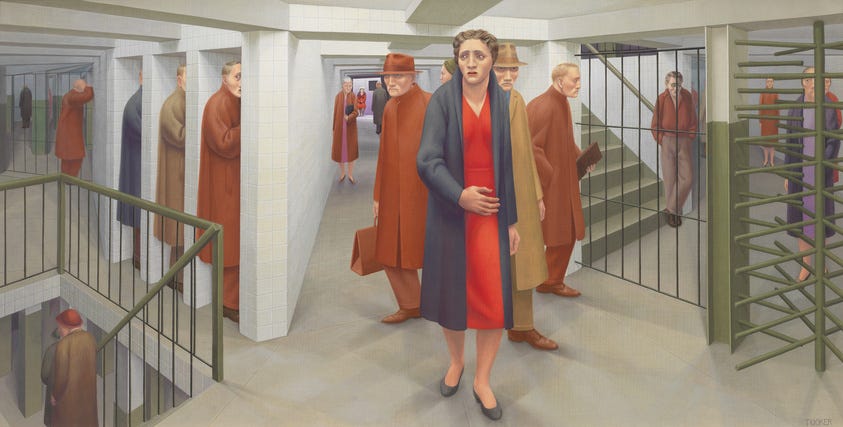
I pondered this. I thought back to the only time I’ve ever seen a newly dead body. I had just moved here, I was waiting at Canal Street, and I saw EMTs drag a man off the Q. I figured he was alive but then knew he was dead because the EMTs stood up and stopped administering CPR. Aghast faces floated past, normal people who hadn’t expected to see death this evening. They carried him away while the rest of us boarded the Q, and the train went on.
The trains can’t stop.
Hearing my doorman recount his story impressed it upon me again: the trains can’t stop.
If there is one uniting creed, one moral imperative in New York, this is it. Individual life, limb, and property just don’t matter in the shadow of the transit timetables of the world’s largest metropolitan economy. This seems impersonal, callous; yet we reveal our own hearts every time the announcer tells us that trains are diverted because somebody fell onto the tracks, and our thoughts turn first to: what does this mean for my day? My schedule? Me?
And you could argue there’s a sort of utilitarian logic at play here: to stop one train is to stop many trains, to put thousands of lives on hold. How many first dates and family dinners are at stake? How many people are rushing to pick up their kids? When does nuisance, summed up, equal the weight of tragedy? I remember a moment of shock at the 9/11 Museum, not at the horror of the attack, but at the fact that the entire MTA was shut down for a few hours. The trains can’t stop, “for he is not a God of the dead, but of the living.”
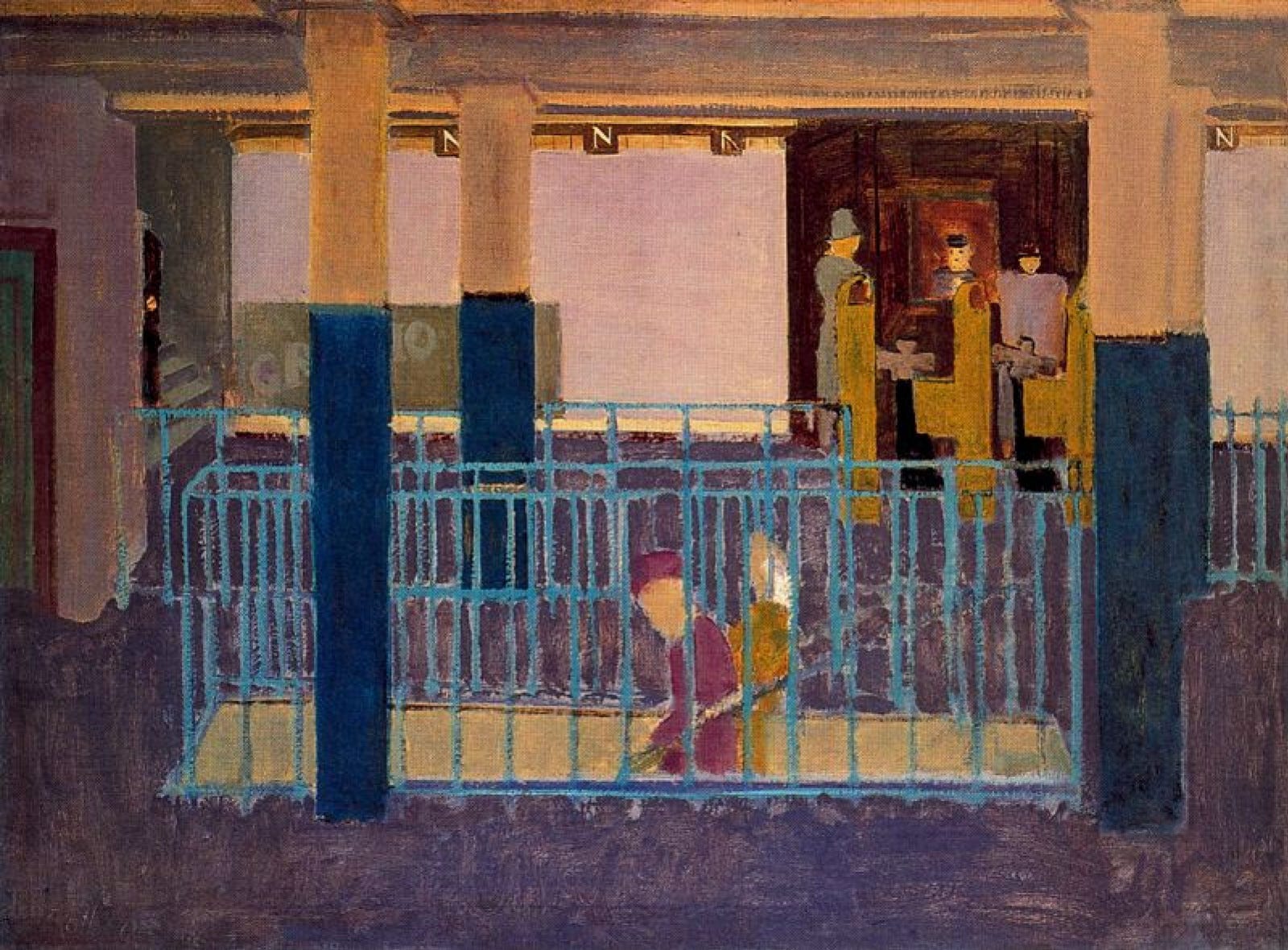
But I suspect this is no secular philosophy. Like the sun and rain of Mesopotamia or the ocean waves off Nordic shores, the subway determines our fortune as an urban species. It’s our Greek mythology, every train line a god, complete with its own lore and personality. It’s the supreme New York religion.
We give tithes to this slithering beast. We meet lovers and enemies in its yawning maw. People die and are born on its altars. We give praise when it shows up right on time, and we curse it, middle finger held high, when it skips our platform. We are always at its mercy.
And like the Greek gods - like the biblical God of Job - these trains toy with us in inscrutable ways. They run express when they should run local. They get stuck under the East River for forty-five minutes. They switch lines entirely, a garbled enigma of a loudspeaker announcement your only guide home. Even the most erudite faithful among us struggle in the chaos our equivocal gods wreak daily.
And so “the trains can’t stop” is not a natural fact; it’s an incantation, a prayer, a plea for baseline normalcy in a world that eats normal everyday.